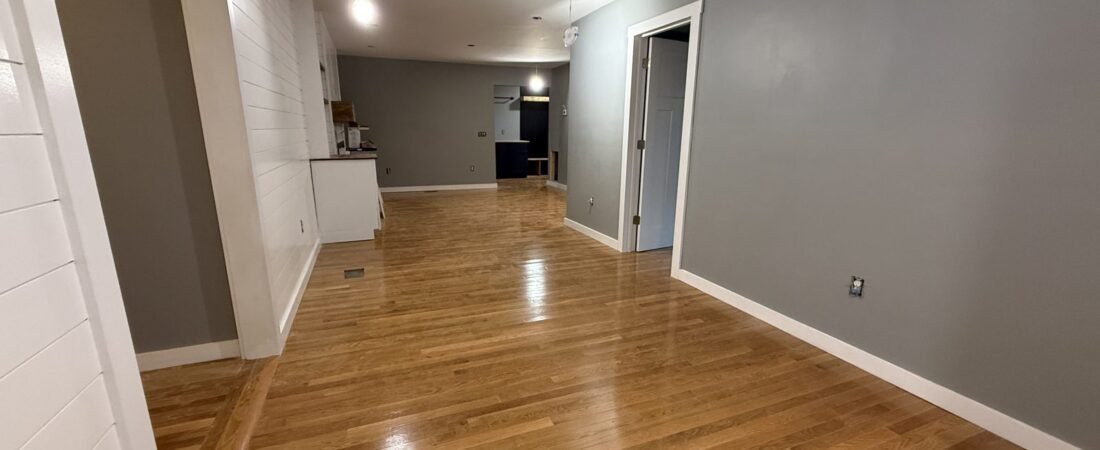
Three years ago a landlord called us about a hole in a rental property wall, about the size of a dinner plate. We patched it, painted it, and the invoice came to less than a hundred dollars. That is what most drywall repair in Cookeville looks like.
The short version of this post: if the damage is dry and the wall around it is flat and solid, it is a patch, and our handyman crew can usually handle it in one visit. If there is a stain, a soft spot or a crack that keeps coming back, find out why before anybody picks up a putty knife.
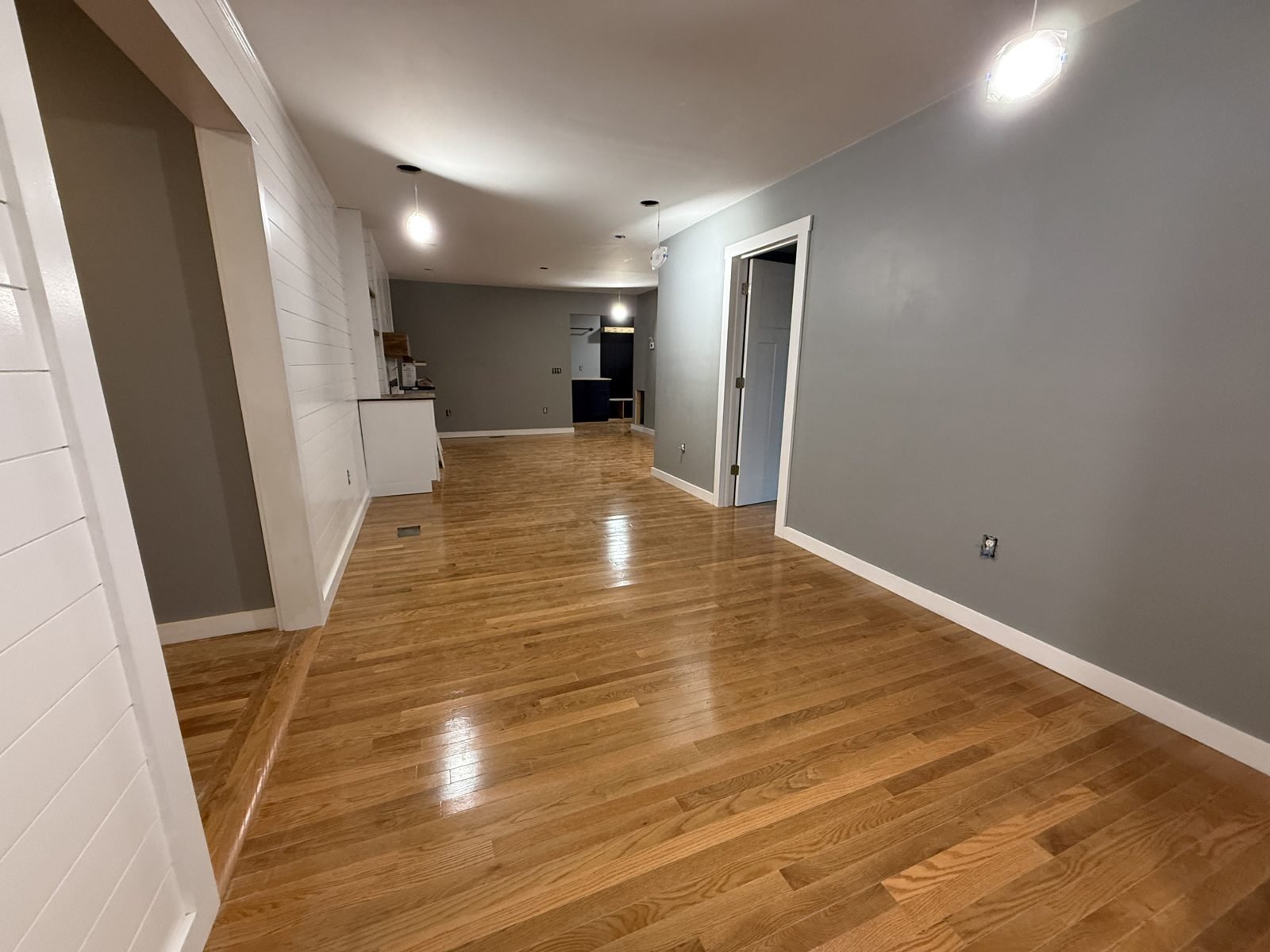
Most drywall damage is a patch
These are the calls we get most often, and all of them are handyman work:
- A doorknob that went through the wall because the door stop broke
- Nail or screw pops, the small round bumps that show up along a stud line
- Dents and scrapes from moving furniture
- Holes left behind by old anchors, shelves or a TV mount
- Hairline cracks along a taped seam
A good patch follows the same order every time. Cut the damage back to solid board, add backing behind anything bigger than a fist, tape the seams, and build the joint compound up in thin coats. Each coat has to dry before the next one goes on, and then it gets sanded, primed and painted. That drying time is why a clean patch is rarely a single pass, and why it makes sense to line up a few other small jobs for the same visit.
The patch is the easy part, matching the wall is the hard part
Homeowners notice a bad repair because of the finish around it. Ceilings and walls in older Cookeville houses often carry a texture that has to be matched by hand. Paint is the other giveaway. Touch-up paint on a wall that was painted years ago almost never blends, even when it is the same color from the same store, because the old paint has aged and the sheen differs.
The fix for that is to repaint the whole wall, corner to corner, so there is no edge for the eye to catch. Our handyman service covers interior touch-up painting and small room painting, so the patch and the paint can happen in one trip.
A stain on the ceiling means find the water first
A brown ring on a ceiling or a bubble in the paint tells you water reached the board. Drywall is paper wrapped around gypsum, and it soaks up water. The EPA’s guidance is to dry water-damaged areas and items within 24 to 48 hours to prevent mold, and it notes that absorbent materials such as ceiling tiles may have to be thrown away if they become moldy (EPA, A Brief Guide to Mold, Moisture and Your Home).
After a leak, we stop the source, dry the cavity behind the board, then cut out and replace the section that got wet. Patching over a stain without fixing the leak gives you the same stain again in a few months, plus whatever has been growing behind it. We wrote up the first 48 hours after water in Water Damage Does Not Wait For Monday.
One limit on our side: H&H is a remodeling and general contracting company, and we do not perform mold remediation. The EPA says a moldy area under about 10 square feet is, in most cases, something a homeowner can clean up, and that larger or water-heavy situations call for more care. If we open a wall and find more than a small spot, we stop, tell you to bring in a licensed remediation company, and schedule the rebuild around theirs.
Cracks that come back are telling you something
Short hairline cracks at the corners of doors and windows are common. Houses move a little with the seasons and those corners are where the movement shows. A crack like that gets taped, mudded and painted, and it usually stays closed.
Be more suspicious when a crack reopens after it was repaired, when it runs on a long diagonal, or when the doors in that room start to stick. Those point at the framing or the foundation under the wall. Patching them again buys a few months. Having someone look at what is behind the board is the cheaper decision over time. Once the drywall comes off, a wall shows a lot, which we covered in Beauty In The Bones (And Also Termites).
Older houses bring plaster and lead paint into it
Homes built before about 1950 often have plaster walls, which are denser and harder to cut and patch than drywall. Matching plaster is its own skill. More on that in older homes in Cookeville.
If the house was built before 1978, ask about lead paint before any sanding. The EPA’s Renovation, Repair and Painting rule covers paid work that disturbs paint in pre-1978 homes. Minor repair that disturbs six square feet or less of painted surface per room inside is excluded, and anything bigger has to follow the rule’s work practices (EPA, RRP Program for Contractors). Ask any contractor how they handle it before the work starts.
What it costs to have H&H fix drywall
Drywall repair runs through our handyman service. The rate on our site is $100 per hour for a two-man crew, one licensed general contractor and one experienced craftsman, with a $100 minimum deposit to schedule. We give you a time estimate before starting.
Since compound needs drying time anyway, most people add other items to the list: baseboard and trim repair, door adjustments, a light fixture or ceiling fan, shelving. The full handyman list is here.
Josie Davis has a line about this kind of work:
“To me and Alec, there’s no small job. Every job has an impact to the customer and to the family that’s living in the home.”
– Josie Davis, H&H Construction
That landlord with the dinner-plate hole called us back later for a full kitchen remodel in his own house. The story is in There’s No Small Job.
When a drywall repair turns into a remodel
Some walls have to come open for plumbing, wiring or framing. At that point it is general contractor work, with permits where the work needs them. We explain where that line sits in General Contractor vs. Handyman.
New drywall is also a big part of finishing a lower level. The basement in our portfolio got new lighting and drywall, and we walked through what to check before you frame a single wall in finishing a basement in Cookeville.
Drywall repair questions we hear in Cookeville
Is drywall repair a handyman job or a contractor job?
Holes, dents, nail pops and small water-damaged sections are handyman work. If the wall has to come open for plumbing, electrical or structural work, that is general contractor work.
Should I replace drywall that got wet?
Often, yes. If the board is soft, sagging, stained through or showing mold, cut it out once the leak is fixed and the cavity is dry. The EPA’s window for drying water-damaged materials is 24 to 48 hours.
How much does drywall repair cost in Cookeville?
With H&H it is billed by the hour through our handyman service: $100 per hour for a two-man crew, with a $100 deposit to schedule. We estimate the time before we start.
Do you repair drywall outside Cookeville?
Yes. We work across Middle Tennessee, including Sparta, Smithville and McMinnville.
📞 (931) 329-5754 | 📧 davishandh@gmail.com